|
1.
Check mirrors, indicate left
check
shoulder, move off when safe.
|
This
step is a basic procedure, every time before pulling away
from the kerb (or changing lanes). |
| 2.
While slowly moving forward, turn the steering wheel quickly to
full left lock. (Full lock’ means turning the wheel as far as
it goes, without forcing it, especially in a vehicle with
power-steering.) |
Never
turn the steering wheel while the vehicle is stationary.
It causes strain on the mechanics and cause excessive tyre wear.
On a very hot bitumen surface it may also damage the
roadway! |
|
3.
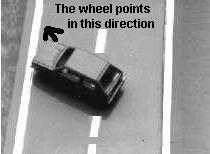
Just before reaching the kerb at the other side turn the wheel
to full right lock, if possible.
Note
the way the wheels are facing >
The further
the wheel has been turned right, the less space is
required to complete the turn.
|
|
| 4.
Stop! Check the road again in both directions. |
If
traffic approaches, use common sense. Most times drivers will
wait. If they don't, you must give way! |
| 5.
Look behind before moving and while you reverse slowly. |
If
you did not manage full right lock at step 3, complete full
right lock! |
| 6.
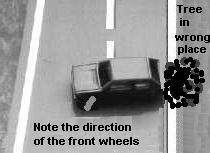
As you approach the other kerb, approx 1 meter before, turn the
steering wheel back to the left, while still moving very
slowly. Note the position of the front wheels!
Had
this driver chosen a place a few meters further on, the tree would not
have become an issue.
>>>
|
|
| 7.
Stop! Check the road again in both directions. |
Traffic
may or may not stop for you. Cyclists take very little space to
move through and you can not hear them. |
| 8.
Complete the turn when clear. |
Stay
right after turning. |


